Studying at PRECE

Studying at PRECE
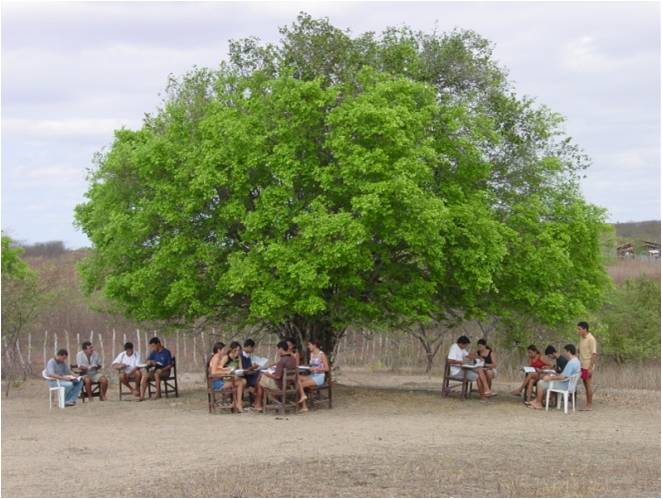
Students from PRECE study together under the juazeiro tree in small groups using cooperative learning

Tuesday, March 29, 2011

Oh... The Places You'll Go...

While in Brasil I have been lucky to have the opportunity to travel and experience this beautiful country- the land, the beaches, the people, the culture, the music, the struggle and the riches. Below are some pictures around and about Brasil!

Rio de Janeiro- Pao do Acucar Rio de Janeiro- Corcovado
Fortaleza- Dragao do Mar
Fortaleza- Beira Mar
Fortaleza Sunset
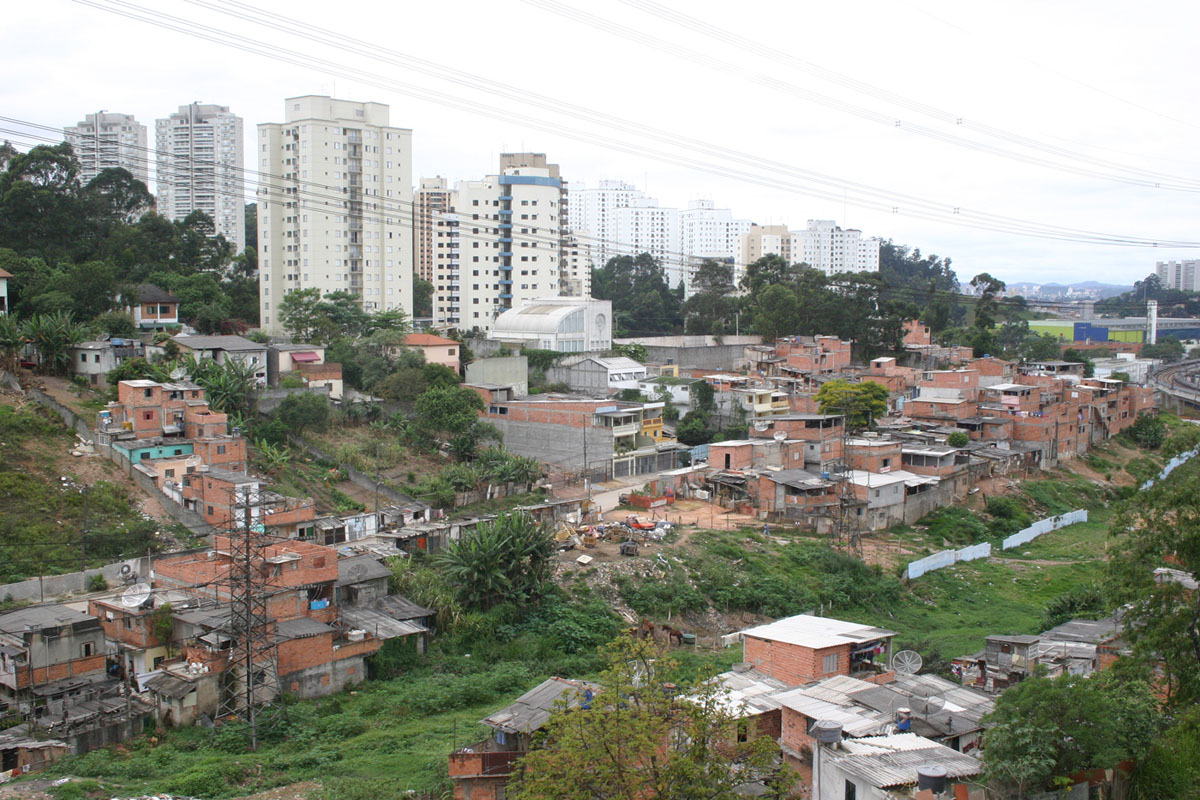
Fortaleza Juxtaposition- From a Favela looking toward Beira Mar
Praia de Iracema
Statue of Iracema (She is sort of like the northeastern Brasilian Pocahontas)
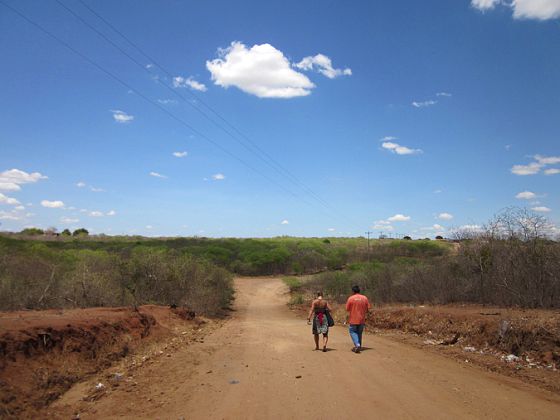
The Interior of Ceara ... during the rainy season
The interior of Ceara... during the dry season
Sunset at Mundau, Ceara
A boat at Mundau, Ceara
Coral Reefs at Mundau, Ceara
Hiking in the mountains of Ceara
Olinda- looking toward Recife, Pernambuco
Walking the streets of Recife, Pernambuco
Teatro Amazonas in Manaus
Medicine Man in the Amazon
The Amazon River
Drinking water from a tree in the Amazon with my guide, Joshua
Alligator spotting in the Amazon River
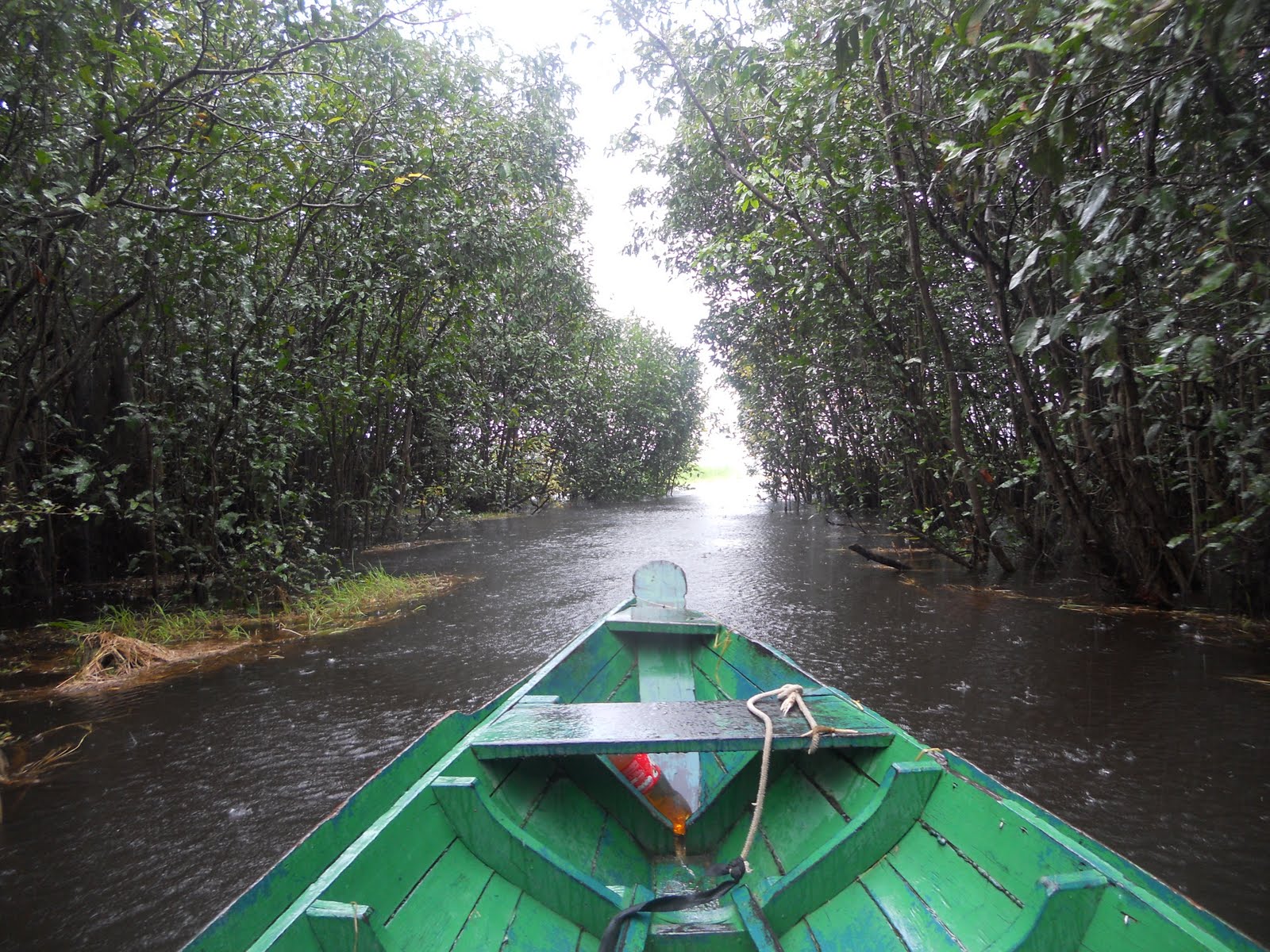
Rain, rain and more rain in the Amazon
Learning to Kite Surf on Cumbuco Beach, Ceara (Photo of Isabela)

Thursday, March 24, 2011

Reflections from a Precisto

Each weekend during March and April PRECE facilitators from each EPC (Cooperative Popular School) are meeting to learn more about the methodology of cooperative learning, the history of PRECE and how to improve the future of PRECE. The post below is a reflection from PRECE student (and now university professor) Nonato Furtado:

"How is a leader born?" This is an interesting question and may have several answers. Many people might not think about this question, but I confess that I have. How did the greatest world leaders arise? How did the main leaders of Pentecost come about? What are their backgrounds, motivations and principles?

Interestingly, yesterday, Brazil received the highest political leader in the world (although this is not consensus), Barack Obama. He broke a tradition of electoral achievements by becoming the first black president in U.S. history. But what would be of Obama if Rev. Martin Luther King Jr. did not lead marches so that African Americans could have the right to vote or so that there would be desegregation and equal working conditions for blacks in the country? If there was no Civil Rights Movement would the U.S. now have a black president? Maybe not. And, what was one thing that triggered the movement of Martin Luther King Jr. and other leaders? The episode is very well known: Rosa Parks, a black woman, refused to give her seat on a bus to a white man and was arrested. This happened in Montgomery, Alabama where Rev. King was a pastor. For many, this was the trigger. Without much exaggeration we can say that the resistence of a woman on a bus meant that many years later, the U.S. could have its first black president.

But what does this have to do with Pentecost? This weekend, the small community of Cipo in Pentecost broke its routine for about 160 students from elementary and high schools from various communities in the city for a training in cooperative learning promoted by PRECE. PRECE leaders had the opportunity to learn a little about the university, the importance of social skills, conflict resolution, social interdependence, strategic planning, cooperative learning strategies, and during it all they shared their life stories. This last point was a moment of mutual motivation.

I attended the event and saw the incredible potential of youth that is not always explored or developed. But, this meeting showed that in Pentecost, in the near future, one can expect new leadership with a new perspective. I noticed the self-motivation and dedication pulsing within the participants. However, I thought about the many other young people, who at the same time, elsewhere in the city, without the same opportunity were using drugs and engaging in prostitution. How can we reach them? PRECE is still trying to reach the majority of the youth in the county of Pentecoste.

Before the Civil Rights Movement led by King, who could have predicted that a black man would be the President of the U.S.? Who can measure the qualitative and quantitative results of a movement? The reality is that in recent years, PRECE has been a fertile ground for the development of youth participation and leadership training. Rebellion and sharing dreams inherent within all of these kids already has shown fantastic results. The fact is that society is increasingly demanding and, consequently, new leaders emerge from this context with the integrity of PRECE. So, without exaggeration, we can say that Pentecost can now have new leaders with a better perspective and vision for the future.

http://nonatofurtado.blogspot.com/

Tuesday, March 8, 2011

When the Dream Becomes a Reality… Part 2

Recently I had the opportunity to travel with a group of PRECE leaders at UFC students from COFAC (the Cooperative Learning program that Prof. Manoel Andrade oversees) to the city of Quixada. What is Quixada, you might be asking… and how do you pronounce that? Both are good questions. The second I still don’t know the answer to!

Quixada is the first systematized multiplication of cooperative learning and the PRECE methodology. So, what exactly does this mean? You might have read my blog a few weeks ago about PRECE receiving administrative control of a public high school/professional school set to open in August. This is PRECE’s first opportunity to use the PRECE methodology in the actual teaching of the classes and structure of the school. You also already know that the PRECE methodology of students studying together in small groups (outside the school setting) has multiplied to 18 different sites. So, what about Quixada is unique and different?

It is here, in Quixada, that the State Secretary of Education and the Federal University of CearĂ¡ have developed the first Cooperative Learning program based in a public school. This program is based on the methodology of Cooperative Learning and PRECE. There are more than 30 student leaders who help to coordinate and oversee study groups and PRECE and UFC students are helping them along the way. When visiting the students at Quixada I was amazed by their enthusiasm for learning, their dedication to improving their situation, their drive to enter the university, and most of all their passion for working cooperatively. They knew not only in their minds but they believed in their hearts that they are global citizens responsible not only for their own successful future but for the future (and present) of everyone. And, they are up for the challenge!

The Beautiful Struggle... Continued...

Not long ago I was traveling with a friend of mine to visit extended family of hers. When I arrived at her grandfather’s home I was greeted not only by the patriarch of the family but nearly all 14 of his children. 14 children- WHEW! The oldest is 49 and the youngest is 21, and they all grew up in the same farm house. The children (all now adults) showed me pictures of their late mother and their childhood. As I browsed the photo albums I tried to imagine raising 14 children... And, then I was invited to visit my friend’s great-grandmother who lived only a few kilometers down the road.

The only thing my friend told me about her before arriving was that she was 89 years old, lived with one son, and “was very very old”. I was expecting a tired, worn woman whose age could be seen in the lines of her face and the gray of her hair. I was wrong. When we arrived Dona Francisca greeted us at the door with the smile and energy of a young adult hosting a house party. She embraced me with the strength of a long lost friend who doubles as a body builder. She scurried around the house pulling out (heavy) wooden chairs for us to sit, showing pictures of her family and Jesus (many many pictures of Jesus), putting fruit on the table for us to eat and guiding us through her home. I was mesmerized by this woman. At 89 where did she find her strength and energy? At 30 I was ready for my mid-afternoon nap!

It was while talking with her and her family that I learned that Dona Francisca had birthed 22 children in her own home. Her husband (who passed 24 years ago) cut the umbilical cord at each birth. She raised all 22 children in her home, cooked meals every day, washed all of their clothes, ensured that they all had an education and raised them in the Catholic faith. She also helped her husband plant crops, grow and harvest those crops, and raise and slaughter animals so her children would always be well fed. What? Who was this super woman? I think I spent the entire afternoon with my mouth gaped wide open in amazement at her vitality.

Before we left the house I asked if I could take a picture of Dona Francisca with some of her family members. It was then that I noticed the lines on her face. They weren’t the lines of old age though. She still has much life to live. They were the lines of challenge and struggle. They were the lines of birthing children without pain killers or a nurse/doctor to assist. They were the lines of planting and tending crops in the hot northeastern Brasil sun. They were the lines of cooking and cleaning day in and day out for 22 children and a husband. They were the lines of her life. And, each line had its own story to tell. They tell the story of struggle, pain, challenge and frustration. But also the story of joy, love, laughter, family and contentment. They are the lines of the beautiful struggle.
Tuesday, March 1, 2011

The Beautiful Struggle

I once had a boyfriend where every second was a trial but at the same moment every second presented an amazing opportunity for growth. A friend from college called the relationship “the beautiful train wreck”. But after 6 years of small derailments but no crash and burn I began to think of our relationship as “the beautiful struggle”. It is fitting that one of the first albums he introduced me to was hip hop artist Talib Kwali’s “The Beautiful Struggle”. This theme of juxtaposition has reappeared frequently in my life- when I studied with the Aboriginal people in Australia, when I lived on the Navajo Nation, living with and loving people who struggled with deep depression, and now again working with PRECE in northeastern Brasil. Every day is a beautiful struggle.

Who wouldn’t consider it a struggle to live without running water, without enough money to pay the electrical bill, with only 2 seasons- one where there is not a drop of rain and one where the rain never ceases- but where neither permit the soil to yield enough crops for an impoverished family to make a living? Who wouldn’t consider it a struggle to live in a community where the government cannot provide paved roads, adequate school buildings, more than one teacher for all grades or access to technology? This life is a struggle.

But, when many Americans and wealthier Brasilians visit the rural areas where PRECE has its roots the struggle is masked by the beauty and happiness of the people. They come away with such a positive impression of the communities and say things like, “they might not have resources… but they are so happy” or “why are we trying to help them… they smile the whole time and we are the ones who are always depressed”. It’s true- the people of the PRECE communities are smiling, happy, loving, and surrounded by those they care for. Their life is beautiful.

It’s a beautiful struggle.

So, how do we hold these two seemingly contrasting ideas in tension? How do we live within the juxtaposition?

In many of my missiology and international development classes we discussed that people from the “developed world” do a great disservice when they visit communities in the “developing world” if they fail to stay involved in partnerships because of the remark, “but they are happy”. I’ve learned over time that, yes, the people of the PRECE communities are happy- primarily because they have their loved ones close to them- but their joy and happiness is also plagued by an uphill battle to gain access to resources. This uphill battle wrought with pain, disappointment and even anger is not often shared with visitors who “pop in” for a week or two. But, it is ever present.

I have learned that we are all actors- each and every one of us. Sometimes we hide the pain, struggle and disappointment behind the face of peace, love, joy, and happiness. These seemingly contrasting emotions are constantly juggled and balanced creating the beautiful struggle.


"Help us discover our chains; don't judge us slaves by the type of shackles you wear." - Henri J. M. Nouwen

Friday, February 25, 2011

ParĂ¡bens, Noberto!!

My newest two Portuguese words are “desafio” which means “a challenge” and “orgulho/ orgulhoso” which means “pride/proud”. Within the PRECE community “desafio” is a word I hear frequently… “orgulho/ orgulhoso”, rarely.

If there is anyone who knows about challenge it is JosĂ© Noberto Sousa Bezerra. Noberto was one of the first seven students who began studying with PRECE in 1994. In 1998 he entered the Federal University of CearĂ¡ in Chemistry with a scholarship. In 2004 he started his masters and two years later in 2006 he began his doctorate. Throughout these years Noberto struggled with many trials and tribulations- simply achieving his degrees, research that proved to be unfruitful, raising a family while studying, more research, and on and on. But, throughout the entire process Noberto had his PRECE family supporting him.

On Thursday, February 24th Noberto defended his doctorate in front of a crowd in the UFC Chemistry Auditorium. That evening friends, family members, professors and other supporters joined at the PRECE institute in Benfica to celebrate with Noberto. Many spoke about Noberto’s courage and how he had encouraged them. Others spoke of Noberto’s determination and perseverance. And, then Noberto spoke…

As American’s we have a saying, “Pull yourself up by your own bootstraps”. It was a phrase my father believed in and I heard consistently as I was growing up. It is also a phrase that I despise. I wonder, (like Dr. Martin Luther King Jr. and others had said before) what the bootless child is meant to do. How is the man born without boots meant to pull himself up by his nonexisting bootstraps? What a cruel saying America has built itself upon.

PRECE has found that by creating a net of support those born without boots and bootstraps are able to pull themselves up by climbing on the backs of one another and then reaching their hands out to pull others up. Through community they are able to reach higher than any one person can do individually. Noberto fully recognized this as he spoke to the group of supporters. He said over and over, “nĂ£o sĂ³ eu” which means “not only me”. He reminded everyone that this success, this doctorate, belongs not only to him but to the entire PRECE community. They stood by him and supported him throughout the process and they are part of his success.

Noberto recognized everyone else, but not once did I ever hear him use the words, “orgulho or “orgulhoso” saying that he was proud of himself or the work he had accomplished. Why? It simply isn’t part of the PRECE culture to dwell within one’s own pride. There is no room for pride when the “desafio” still exists and the success belongs not to one but to all. What a beautiful thing!

Monday, February 21, 2011

When the Dream becomes Reality

All of us have dreams, vision and goals for the future. When I was a child I dreamed that I would be an Olympic Gymnast. I loved the sport, I trained constantly, my parents dumped thousands of dollars in to my gym, camps and meets, and I actually had potential. Obviously that dream never became a reality. But, for the fortunate few- those who presevere, never lose sight of the dream and who don’t let “no” stand in their way- the dream does become a reality.

More than 16 years ago Prof. Manoel Andrade had a dream to revolutionize education in Brazil. He was well aware that the public school system in the impoverished rural areas of northeastern Brazil was failing the students. The schools didn’t have the resources they needed, the teachers often didn’t have the education or support they needed, and frequently there weren’t even schools that went past middle school. How were the communities ever meant to develop if the students weren’t provided the education they needed to enter the university and gain the skills they needed to improve their communities? But, Prof. Andrade and others had a vision and a dream- PRECE- the Program of Education in Cooperative Cells. Together they developed a methodology where the students would study in small groups depending on one another to gain knowledge and comprehension. The support that they gained from one another fueled their ambition to study and succeed. 16 years later the movement has helped over 400 students enter the university, over 50 graduate and 18 go on to graduate degrees. The methodology works and students, families and communities are improving.

Recently PRECE has taken another giant leap toward the dream becoming a reality. Currently the Secretary of Education in the state of CearĂ¡ is building a new Professional and High School in the town of Pentecoste (the county were PRECE began and has the most momentum). The state has asked PRECE to take administrative control of the school and use the Cooperative Learning methodology to teach! This is not only a great honor but a great opportunity. If PRECE leaders have success and the students at the school experience more success/higher test scores than other public schools around CearĂ¡ there is a chance that the methodology can be spread to every other school. Talk about change! Talk about an educational revolution! Sometimes dreams do become reality!

The school will open in August and right now PRECE leaders are busy planning for the opening. We deeply appreciate all your support and prayers. If you want to see what the new school will look like please check out the video below.